A space robot may spend years doing work that would expose a person to vacuum, radiation, dust, or a dangerous fall. Its value comes from keeping people away from those hazards, while its main risk comes from fixing a machine that cannot be reached by hand.
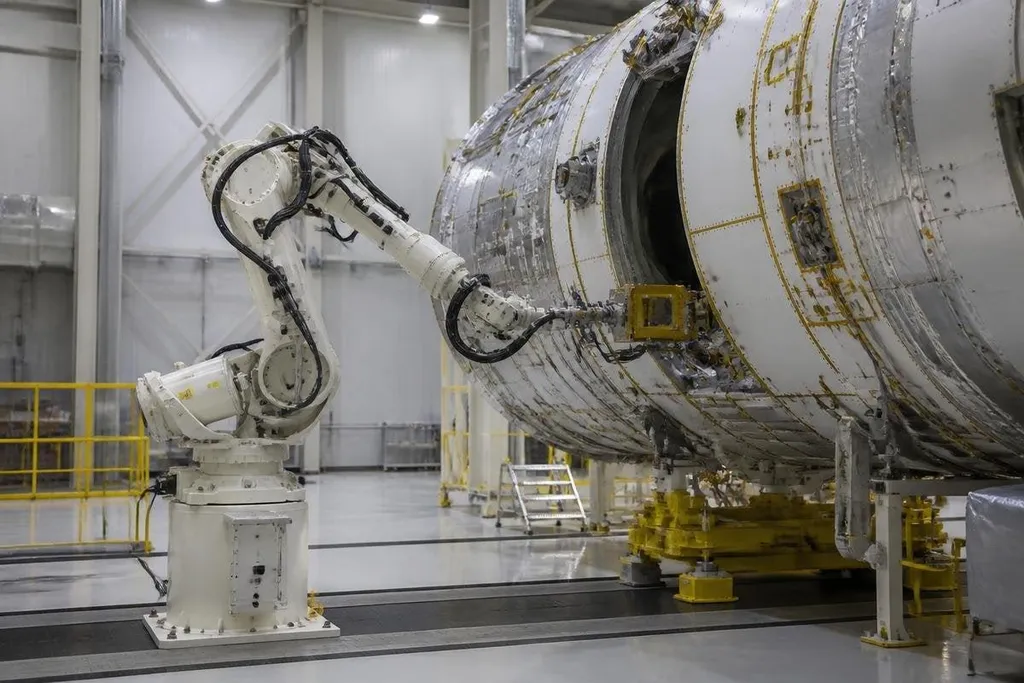
- Robotic arms can move tools and equipment outside a spacecraft.
- Rovers can inspect ground that may damage a crewed vehicle.
- Communication delay can make remote control slow or impractical.
What space robots do well
Space robots handle tasks that need reach, repeatable movement, or long exposure to harsh conditions. A robotic arm can move a cargo container, hold a camera, or place a tool without sending a person outside a spacecraft.
Rovers use cameras and other sensors to inspect terrain from a distance. Wheels or legs keep the main vehicle away from sharp rocks, loose soil, and slopes that could trap it. The robot can send images back before a crew or another machine moves into the same area.
Some space robots work inside spacecraft. They can carry items, inspect panels, or support routine work in tight areas. That leaves crew members more time for tasks that need judgment, repair skill, or direct handling.
The work also creates a safer path for future missions. A robot can inspect a site, move supplies, or prepare equipment before people arrive. This approach reduces the number of unknowns waiting for a crew on the ground.
Where autonomy helps
Far from Earth, the robot cannot wait for a person to guide every motor movement. Radio signals take time to travel, and the delay grows with distance. On a nearby mission, an operator may guide a machine step by step. Farther away, the robot needs software that can detect obstacles, choose a safe route, and stop when its sensors report a problem.
Autonomy does not mean the robot makes every decision alone. A common setup gives the robot a narrow task, such as moving to a marked location or keeping a camera pointed at a target. A person sets the goal, checks the results, and changes the plan when the robot reports an unsafe condition.
A space robot can keep moving after its radio link drops, so the control plan matters as much as the software. For a space-systems buyer, a report at Robot24.com can tie an autonomy claim to the machine, control link, task, and test date. A lost signal or bad sensor reading can turn that choice into a physical hazard.
The risks are physical and operational
Space removes many repair options. A motor may fail in vacuum, a wheel may lose grip, or a sensor may collect dust that blocks its view. Radiation can damage electronic parts over time, while sharp temperature changes place stress on materials, seals, and cables.
Power also limits the work. Solar panels may receive less light, batteries may lose charge in cold conditions, and heaters may use energy needed for movement or communication. A robot that reaches a site but cannot keep its electronics warm has not completed the job.
Communication adds another failure point. A weak link can delay images and control commands. If the robot stops in an unsafe position, an operator may need to wait for new data before trying a recovery command.
Software errors can cause physical damage. A wrong map may send a rover toward a slope. A poor estimate of wheel grip may leave it stuck.
A bad arm command may push equipment into a spacecraft panel. Testing on Earth can reduce these risks, but it cannot copy every detail of another world.
What remains unproven
A successful demonstration does not prove that a robot can work for months without help. It may show movement, sensing, or tool use under controlled conditions while leaving long-term wear, dust buildup, and recovery after failure unanswered.
The business case also depends on the mission. A robot may cost less than sending people into danger, but its design, launch, control systems, and support work still carry a high price. A cheaper machine has little value if one failed wheel ends the mission.
I'd choose a slower robot with clear fault handling over a faster one that needs constant commands. In space, a safe stop can protect the mission while a small movement error can end it.
A practical check before deployment
Use this checklist when judging a proposed space robot:
- Task scope: Can the robot finish one well-defined job without constant control?
- Failure response: Does it stop safely when a sensor, motor, or radio link fails?
- Repair plan: Can another robot or crew member reach the failed part?
- Power budget: Is there enough energy for movement, heating, sensing, and radio work?
- Terrain data: Has the team tested slopes, loose soil, dust, and poor visibility?
- Proof level: Has the system worked in a test that matches the mission site?
That last check decides how much trust the robot deserves. The open question for many space systems is not whether they can move, but whether they can recover after the first fault that no Earth-based test predicted.